Updates to Rates Effective March 1, 2026

Rates Are Set at Actual Cost of Service

PEC is proud to offer some of the lowest electric rates in Texas while also bringing the best value and reliability to our growing membership. As a nonprofit cooperative, PEC does not make a profit from rates, but we must regularly review and adjust them to recover the cost of providing safe and reliable power to all our members. These changes reflect the increasing price of power in the ERCOT market.

This is especially important as PEC is a nonprofit and works hard to ensure that the cost of service to its membership is accurate. On March 1, 2026, PEC will adjust rates based on the results of our 2026 Rate Plan. A residential member using 1,250 kWh per month will see an approximate increase of 3.2% on their electric bill, which is equivalent to $5 more per month.

The changes include:

  • Increasing the Base Power Charge from $0.061900 to $0.065900 per kWh to reflect the increasing price of power on the wholesale market. This is the only change that will affect most residential members.
  • For all members on the Time-of-Use Rate, adjusting the seasons, time periods, and rates for the Time-of-Use (TOU) Rate to more accurately reflect expected pricing patterns in the wholesale market.
  • For interconnection members, decreasing the Sustainable Power Credit.
  • For interconnection members, implementing a Time-of-Use Rate Credit option.
  • For large power members, replacing the Peak Demand Charge with a Peak Capacity Charge.


View the presentation to the PEC Board of Directors for more details. Rate information and FAQs can also be found below.

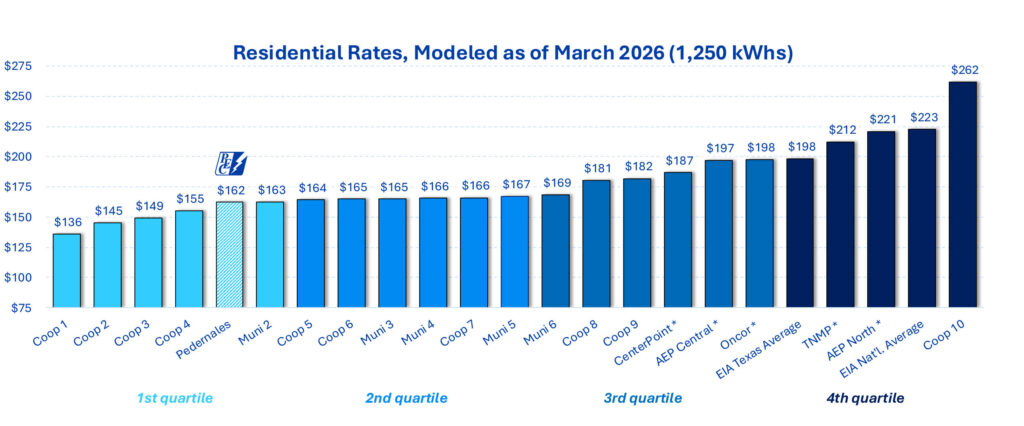
See how PEC compares with other Texas electric utilities:

Electric rate comparison chart - Texas
* Competitive areas of the ERCOT retail market.

Rate details

The Base Power Charge is being adjusted from $0.061900 to $0.065900 per kWh.

For the typical residential member who uses 1,250 kWh of power per month, the changes may result in an average increase of 3.2% to their total bill, or $5 per month.

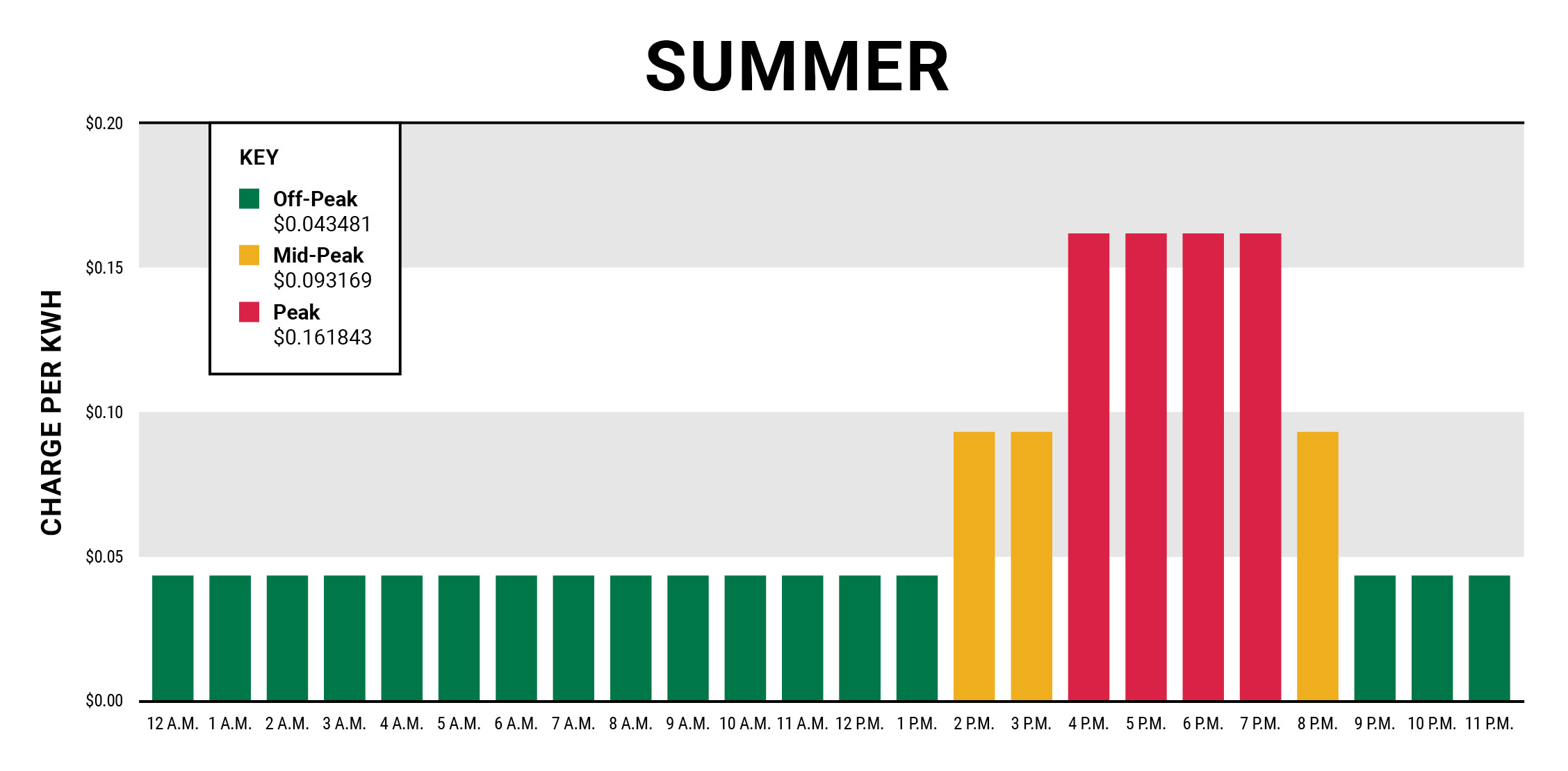
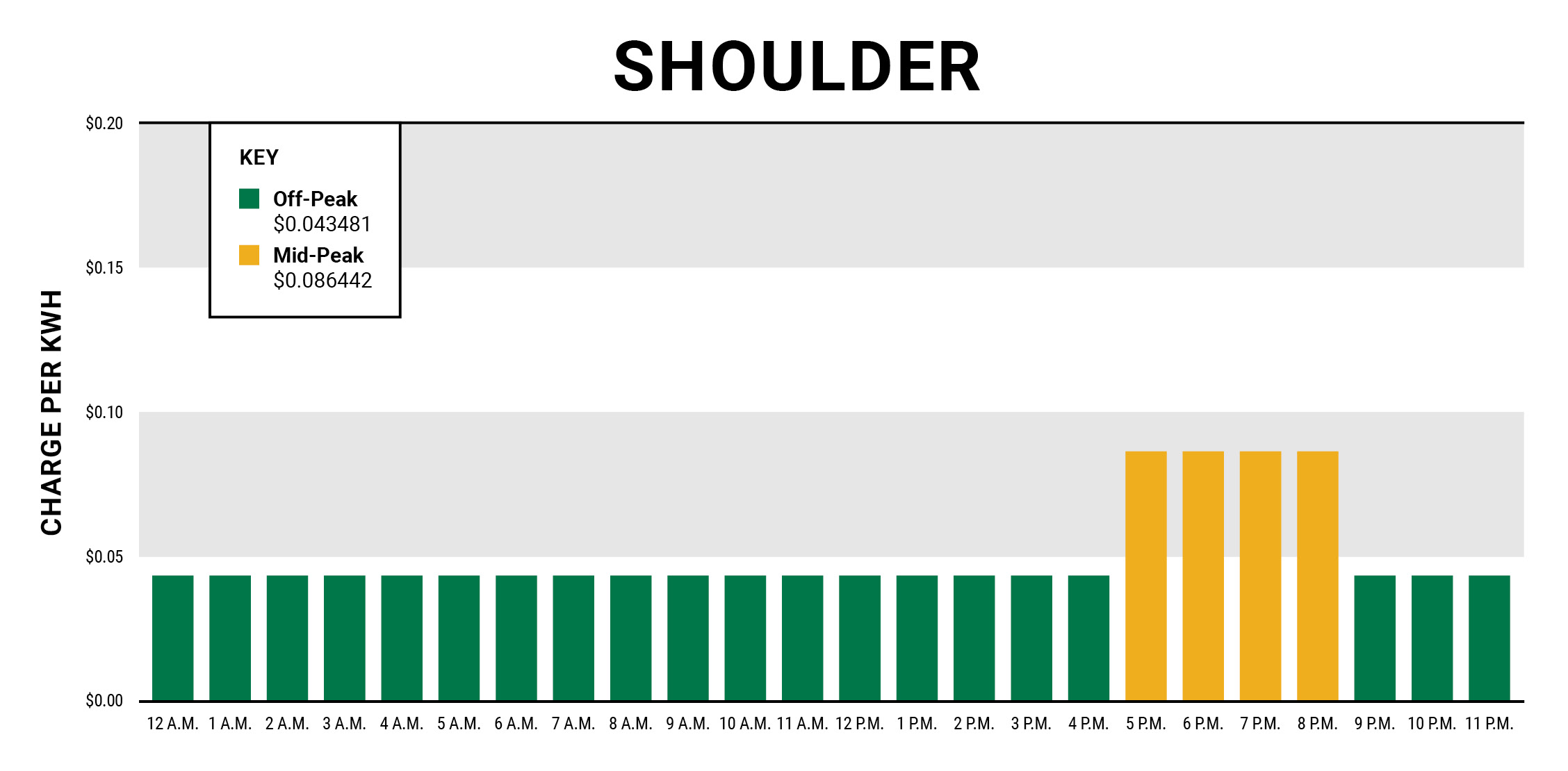
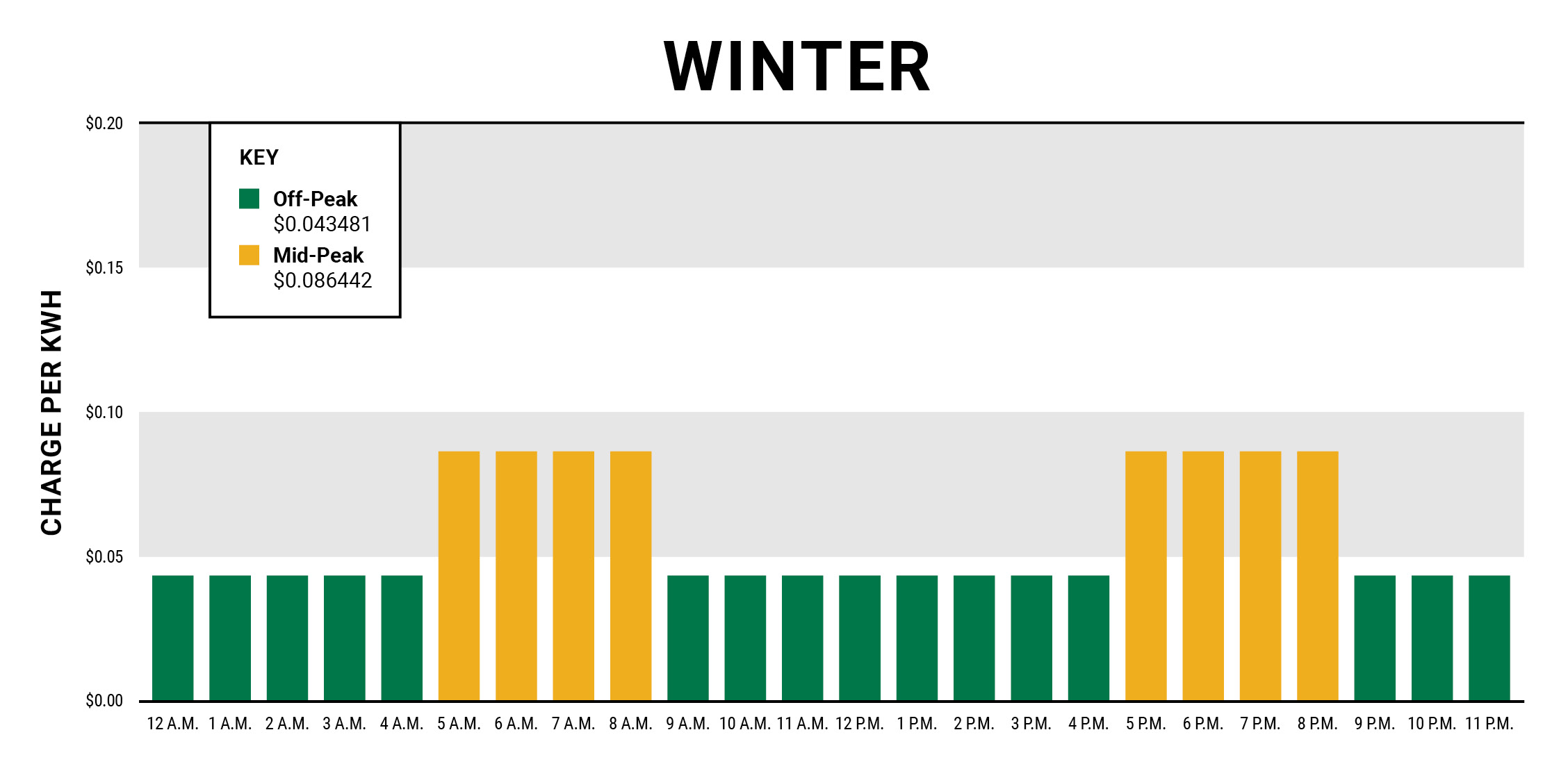
For all members on Time-of-Use rates, the seasons, time periods, and rates for the Time-of-Use (TOU) Base Power Charge will be adjusted to more accurately reflect expected pricing patterns in the wholesale market.

Season

Time of Use Period

Charge per kWh

Summer
(June-September)

Off-Peak

12:01 a.m.-2 p.m.; 9:01 p.m.-12 a.m

$0.043481

Mid-Peak

2:01-4 p.m.; 8:01-9 p.m.

$0.093169

Peak

4:01-8 p.m.

$0.161843

Shoulder
(March, April, May, October, November)

Off-Peak

12:01 a.m.-5 p.m.; 9:01 p.m.-12 a.m.

$0.043481

Mid-Peak

5:01-9 p.m.

$0.086442

Winter
(December-February)

Off-Peak

12:01-5 a.m.; 9:01 a.m.-5 p.m.; 9:01 p.m.-12 a.m.

$0.043481

Mid-Peak

5:01-9 a.m.; 5:01-9 p.m.

$0.086442

The Sustainable Power Credit is updated annually to ensure it compensates interconnected members for received energy at a rate that aligns as closely as possible with the value to the cooperative. To more accurately reflect this, the Sustainable Power Credit will be adjusted from $0.082666 to $0.071921 per kWh. This credit will be applied toward the Base Power Charge only, and any unused credit will expire at the end of each calendar year.

The 2026 rate plan establishes an Interconnect Time-of-Use Rate (TOU) option for members with distributed energy systems, excluding those on the Interconnect Wholesale Energy Rate.

The charge allows interconnection members to receive a Base Power Credit for surplus energy generated by a distributed generation system and pushed on the grid. The credit amount varies based on the time of day and season that the energy is produced. Credits will be applied toward the TOU Base Power Charge, and any unused credits will expire at the end of each calendar year. 

The Interconnect TOU Rate option requires a 12-month commitment. After 12 months of enrollment, members may opt out. After opting out, members must wait a full year to reenroll.

Time-of-Use Base Power Credit rates:

Season

Time-of-Use Period

Credit per kWh

Summer
(June-September)

Off-Peak

12:01 a.m-2 p.m.; 9:01 p.m.-12 a.m.

$0.043481

Mid-Peak

2:01-4 p.m.; 8:01-9 p.m.

$0.093169

Peak

4:01-8 p.m.

$0.161843

Shoulder
(March, April, May, October, November)

Off-Peak

12:01 a.m.-5 p.m.; 9:01 p.m.-12 a.m.

$0.043481

Mid-Peak

5:01-9 p.m.

$0.086442

Winter
(December-February)

Off-Peak

12:01-5 a.m.; 9:01 a.m.-5 p.m.; 9:01 p.m.-12 a.m.

$0.043481

Mid-Peak

5:01 a.m.-9 a.m.; 5:01-9 p.m.

$0.086442

The Peak Capacity Charge for large power members will be based on a 15-minute interval rather than an hourly interval. While the Peak Demand Charge is based on the member’s peak demand, or usage during peak periods, the Peak Capacity Charge will be measured as the power delivered to a member or received by PEC for any interval during the billing period. The Peak Capacity Charge will align with the member’s rate schedule and will replace the existing Peak Demand Charge.

Frequently Asked Questions

PEC must assess its rates to ensure it is recovering the true cost of providing safe, reliable electricity to its members. PEC is a nonprofit, and member rates must always cover our operating and maintenance expenses, power supply costs, and principal and interest debt obligations. These expenses are driven by a variety of factors that are often out of our control, such as Electric Reliability Council of Texas (ERCOT) transmission access charges and wholesale power supply costs. The 2026 adjustment to PEC’s Base Power Charge is driven by rising wholesale power costs.

Yes, costs are increasing for utilities across the country, mainly due to tighter conditions in wholesale electricity markets driven by growing demand for power.

PEC is a nonprofit, and member rates are the utility’s main source of revenue. As market conditions change, we must continually review and assess our rates to ensure we’re recovering the actual costs associated with providing safe, reliable electric service to our members. PEC must adjust rates to ensure it can continue to operate in a rising cost environment.

PEC is always looking for ways to keep costs low for its members. While wholesale power and transmission charges are not determined by PEC, we are committed to managing costs in areas that are within our control. PEC continually reviews its processes to increase efficiencies where possible and leverages technology to ensure our system remains safe, reliable, and resilient.  

The price of wholesale power is set by the ERCOT market. ERCOT is the grid operator for 90% of Texas and oversees the wholesale electric market. PEC is an active participant in the ERCOT market and purchases power on behalf of our membership. Wholesale power costs are determined based on market conditions, including supply and demand, fuel prices, and the generation mix. Based on expected market conditions and other factors, the Base Power Charge is increasing by $0.004000 per kWh.

The 2026 rate adjustment will impact residential, small power, and large power rate classes.

A residential member using 1,250 kWh per month will see an approximate increase of 3.2% on their electric bill, which is equivalent to $5 more per month. Even with the increase, we’re proud that PEC still offers some of the most competitive electric rates in Texas.

PEC’s 2026 rate plan includes the following adjustments:

  • Adjusting the Base Power Charge from $0.061900 to $0.065900 per kWh to reflect the increasing price of power. This is the only change affecting most residential members.
  • Adjusting the time-of-use (TOU) Base Power Charge to more accurately reflect expected pricing patterns in the ERCOT wholesale market.
  • Adjusting the Sustainable Power Credit and providing the option for members with distributed energy systems to select the Interconnect TOU Rate, which includes a TOU Base Power Credit, as an alternative price to the Sustainable Power Credit if they choose.
  • Replacing the Peak Demand Charge with a Peak Capacity Charge for large power members.

The PEC Board of Directors approved the final rate changes at the November 21, 2025, Board of Directors meeting, and the approved changes will take effect March 1, 2026.

The service availability and delivery charges for residential and small power members (single phase and three phase) were adjusted in March 2025 to reflect the true cost of providing power to our members.

Residential members who are not on a time-of-use rate pay the same flat rate regardless of when energy is consumed. This Flat Base Power Charge will increase from $0.061900 to $0.065900, which will be an increase of approximately 3.2%, or $5 per month for a residential member using 1,250 kWh.

Under this rate option, the cost of power varies based on time of day and season. Rates are lower during off-peak and mid-peak hours and higher during summer peak hours when demand for energy is highest. Simple behavior changes, such as raising your thermostat a few degrees and shifting the use of large appliances, can lower energy use at home. Members currently on PEC’s TOU rate plan will be subject to these new rates unless they request to switch to another rate.


TOU Base Power Charge (Effective March 1, 2026)

Season

Time of Use Period

Charge per kWh

Summer
(June-September)

Off-Peak

12:01 a.m.-2 p.m.; 9:01 p.m.-12 a.m

$0.0434814

Mid-Peak

2:01-4 p.m.; 8:01-9 p.m.

$0.093169

Peak

4:01-8 p.m.

$0.161843

Shoulder
(March, April, May, October, November)

Off-Peak

12:01 a.m.-5 p.m.; 9:01 p.m.-12 a.m.

$0.043481

Mid-Peak

5:01-9 p.m.

$0.086442

Winter
(December-February)

Off-Peak

12:01-5 a.m.; 9:01 a.m.-5:00 p.m.; 9:01 p.m.-12 a.m.

$0.043481

Mid-Peak

5:01-9 a.m.; 5:01-9 p.m.

$0.086442

The Sustainable Power Credit is designed for members who have their own distributed energy systems, such as rooftop solar and/or batteries, and constitutes the Interconnect Rate (but excludes those on the Interconnect Wholesale Energy Rate). The credit compensates members for surplus energy put onto the electric grid and is updated annually to ensure the credit amount aligns closely with prices in ERCOT’s wholesale market. As a result, the Sustainable Power Credit will be lowered from $0.082666 to $0.071921 per kWh. The credit will be applied toward the Base Power Charge, and any unused credits will expire at the end of each calendar year.

The energy received from members’ distributed energy systems helps offset PEC’s purchased power costs. It does not offset fixed costs, such as the Service Availability Charge and Delivery Charge, which cover expenses such as equipment, maintenance, and system administration. Any credits earned will apply toward power costs only.

Yes, members with an Interconnection Agreement (excluding members on the Interconnect Wholesale Energy Rate) will be eligible to switch to the Interconnect TOU Rate beginning March 1, 2026. Members who switch to this rate will be subject to the TOU Base Power Charge and be eligible to receive the TOU Base Power Credit for surplus energy pushed onto the grid.

The TOU Base Power Credit applies to members with an active Interconnection Agreement and who are enrolled in PEC’s Interconnect TOU Rate. The credit compensates members for surplus energy generated by a distributed energy system and pushed onto the grid. The credit will be applied toward the TOU Base Power Charge, and any unused credits will expire at the end of each calendar year.

The Interconnect TOU Rate option requires a 12-month commitment. After 12 months of enrollment, members may opt out. After opting out, members must wait a full year to reenroll.


TOU Base Power Credit
(Effective March 1, 2026)

Season

Time of Use Period

Credit per kWh

Summer
(June-September)

Off-Peak

12:01 a.m.-2 p.m.; 9:01 p.m.-12 a.m

$0.043481

Mid-Peak

2:01-4 p.m.; 8:01-9 p.m.

$0.093169

Peak

4:01-8 p.m.

$0.161843

Shoulder
(March, April, May, October, November)

Off-Peak

12:01 a.m.-5 p.m.; 9:01 p.m.-12 a.m.

$0.043481

Mid-Peak

5:01-9 p.m.

$0.086442

Winter
(December-February)

Off-Peak

12:01-5 a.m.; 9:01 a.m.-5 p.m.; 9:01 p.m.-12 a.m.

$0.043481

Mid-Peak

5:01-9 a.m.; 5:01-9 p.m.

$0.086442

No. The TOU Base Power Credit is based on the expected power costs used to calculate the TOU Base Power Charge and will be applied in specific periods. The Sustainable Power Credit is calculated using a three-year average of the historical value that PEC’s residential and small power member DG systems provide and is applied whenever power is received by PEC.

The Peak Capacity Charge for large power members will be based on a 15-minute interval rather than an hourly interval. While the Peak Demand Charge is based on the member’s peak demand, or usage during peak periods, the Peak Capacity Charge will be measured as the power delivered to a member or received by PEC for any interval during the billing period. The Peak Capacity Charge will align with the member’s rate schedule and will replace the existing Peak Demand Charge.

Search